 Narstar

Fee-only financial advisor in Sandy, Utah.
Four model portfolios, managed by one adviser you can speak with directly. We handle portfolio selection, trading and ongoing reviews for a published annual fee. Each portfolio can lose money, including what you put in.
$3,000 per account. SIMPLE IRA participant accounts have no minimum.
Four portfolios, each with a different purpose.
Rates below apply to single-portfolio taxable accounts; all retirement and multi-portfolio taxable accounts use the uniform 1.00% rate.
We may use one portfolio or a mix.

Income
For cash flow- Dividend-paying stocks, individually selected
- Companies selected for cash flow
- Risk: dividend cuts, sector concentration

Trend
Follows price trends- Price trends and historical-volatility screening
- Unfilled allocations use short-term Treasury funds
- Risk: market declines and complex products

Growth
For long-term growth- Individual stocks, low portfolio turnover
- Built to hold for years at a time
- Risk: concentration, extended declines

Speculative
For a higher-risk slice- Small-cap, thematic, and select emerging-market holdings
- Not appropriate for all investors
- Risk: sharp declines of 30% or more
What all four have in common
- Your assets stay in your name
- Your account is held at Interactive Brokers. Narstar manages the investments.
- The same model for everyone in it
- Everyone in a model owns the same holdings. We do not personalize holdings or accept security restrictions.
- Each model reviewed at least quarterly
- We review positioning, holdings, and our reasons for owning each holding at least quarterly. Changes apply to every account in the model.
- We trade without asking first
- We place trades without asking you first, so model changes can reach accounts the day we make them.
- Your account reviewed at least annually
- We review sooner after major deposits, withdrawals, changes in your situation, market events, corporate actions, or on request.
- The custodian keeps the record
- Interactive Brokers holds assets in your name and sends statements at least quarterly. Ask us anytime for a portfolio summary.
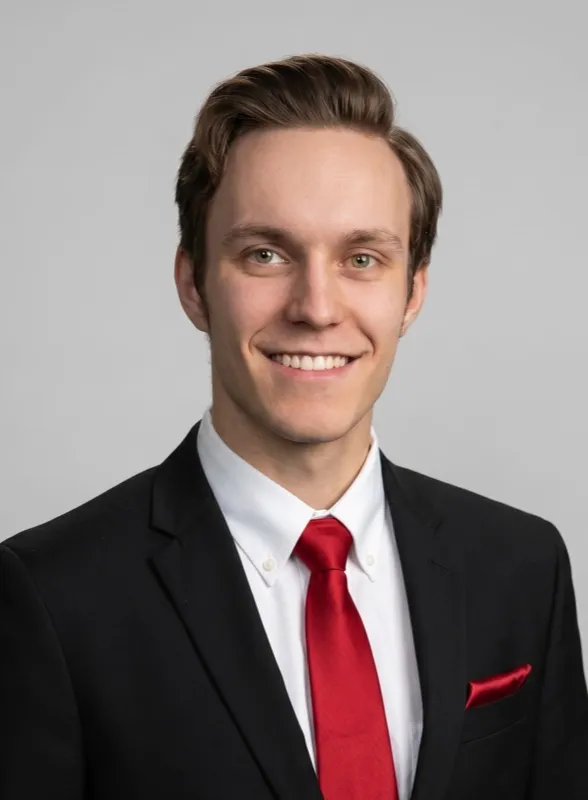
Who manages your portfolio
I'm Pavel Naruta, an investment adviser representative based in Sandy, Utah. I make the investment decisions for every account, from the first trade to ongoing monitoring. Your assets are held at Interactive Brokers in your own name, and every conflict of interest is disclosed in the Form ADV.
Before this I spent nearly three years building quantitative tools for a logistics firm, working through large financial and freight datasets to find what the numbers actually showed. That habit of pushing past the surface number is how I read a company now.
Narstar is a one-person firm. The person who answers your email is the person who places your trades. It also means the firm depends on one person, disclosed as key person risk in the Form ADV.
Clear annual fees. No setup or exit fee.
These are estimates. Your real fee is based on your account's average daily value and is charged every three months, after the period ends. Interactive Brokers may charge its own fees. SIMPLE IRA participant accounts have no minimum. The slider stops at $250,000, its display ceiling, but there is no account maximum. This estimate does not decide which portfolio fits you or whether you qualify. Full fee terms.
Uniform account rate
All retirement accounts (Traditional, Roth, Rollover, SEP, SIMPLE, and inherited IRAs) and taxable accounts with two or more model portfolios pay 1.00% annually on the whole account, including cash. The model rates apply to single-portfolio taxable accounts. See fee terms and exceptions.
Account minimum
$3,000 per account. SIMPLE IRA participant accounts have no minimum. See minimums and allocation rules.
Getting started takes three steps
A conversation, a recommendation, then we manage the account. No lengthy application, and you can stop at any step.
Answer a few questions
Tell us your goals, timeline, and how you think about risk.
We recommend a portfolio
Based on your situation, we recommend one portfolio or a combination. You decide whether to proceed.
We manage your account
We handle the trading. You can end the agreement anytime in writing. There's no exit fee. When you leave, we normally sell your holdings to cash, which can create a tax bill.
Is Narstar a fit for you?
A good fit if
- You want a fee-only fiduciary to select, trade and monitor your investments through defined model portfolios.
- You're investing for years, not months.
- You understand that markets go up and down, and that you can lose money.
- You're willing to open an account at Interactive Brokers, starting from $3,000.
- The money sits in an account we manage: an individual or joint taxable account; a Traditional, Roth, Rollover, SEP, or inherited IRA; an employer-sponsored SIMPLE IRA participant account; a trust account; or a business or other entity account.
Probably not a fit if
- You need certainty about future returns.
- You expect to need the money in the near term.
- You want to choose every investment and approve every trade yourself.
- You need financial planning, tax advice, estate planning, budgeting, or debt strategy. We don't offer any of them.
- The money is in an active employer 401(k) or an RSU account at an employer brokerage. We can't manage those.
Questions we hear most
-
NarStar LLC is registered with the State of Utah (CRD #337496) and conditionally registered with the State of Texas. You can verify both on IAPD (opens in new tab) at any time. The adviser passed the Series 65 and SIE exams. Full background, fees, and how Narstar operates are disclosed in Form ADV, which is linked on this page. IAPD is the SEC's public database for all registered investment advisers. If a firm isn't listed there, that's a red flag. Narstar is. Learn more about what fiduciary duty actually requires.
-
Fee-only means the adviser's only revenue comes from client fees: no commissions, no product sales. A taxable account with one model portfolio pays 0.60% annually for Income, 1.00% for Trend, 1.20% for Growth, or 1.60% for Speculative. Taxable accounts with two or more model portfolios and all retirement accounts, including inherited IRAs, use a uniform 1.00% annual rate on the whole account, including cash. Billed quarterly on the average daily value of your account. There are no signup fees or separate exit fees. Advisory fees accrue through the day our management ends. Interactive Brokers may charge separate brokerage commissions and fees. The fee-only structure reduces many common conflicts. It does not eliminate every conflict. Remaining conflicts are disclosed in Form ADV.
-
Your money is held at Interactive Brokers (opens in new tab), a publicly traded brokerage, in an account in your name. Narstar can trade securities in your account. Interactive Brokers deducts our advisory fee. We may move cash between your own IBKR accounts in the same registration only on your written instruction. We cannot send your assets to third parties or withdraw them for our own benefit. You can log in and see everything anytime. Interactive Brokers is a SIPC member, which means your cash and securities are covered up to $500,000 if the brokerage fails, plus up to $30 million in excess coverage, subject to policy terms and conditions. You can verify SIPC coverage on IBKR's site (opens in new tab). But SIPC coverage doesn't protect against market losses.
-
Your account can lose value when markets decline. Income, Growth and Speculative follow company-based investment decisions: we review holdings and may sell when our reason for owning a company changes. Trend follows price-trend, momentum and historical-volatility rules, with short-term Treasury funds for unfilled allocations. All four portfolios can lose money. If a sharp decline would cause serious financial hardship, the allocation or portfolio may not fit your situation.
-
Then you can't open a managed account with us yet, unless it's a SIMPLE IRA participant account through your employer, which has no minimum. You're welcome to reach out now. We can answer your questions, and you can open your Interactive Brokers account when you're ready. Ask a question.
Ask a question
There's no commitment and no sales pitch. Ask whatever you need to know before you decide.
- [email protected]
- (801) 251‑6844
- Sandy, Utah